








AMH fertility test: Understand your fertility potential through AMH testing for ovarian reserve
Maw-Sheng Lee
2026.03.10
2026.07.21
Catalog
- Introduction
- AMH Blood Test: How does AMH level determine the ovarian reserve?
- 4D Ultrasound in Evaluation of the Ovary
- Ovarian reserve not a direct predictor of pregnancy
Recommended
- Gynecology Care 2026.03.25 《 Netizens Questions 》I really want to get pregnant! But I have a history of gynecological problems.
- Fertility Medicine 2026.03.25 《 Netizens Questions 》Questions During Pregnancy
- Gynecology Care 2026.01.12 What Causes Uterine Fibroids and What Are the Warning Signs? A Doctor’s Guide to Surgery and Dietary Precautions
Categories
Patients with infertility have gotten younger in recent years. How can we know about how our ovaries function as intended? Your egg quantity and ovarian reserve can be assessed using AMH blood testing and 4D ultrasound. Let’s discuss these two assessment methods for determining the ovarian reserve!
AMH Blood Test: How does AMH level determine the ovarian reserve?
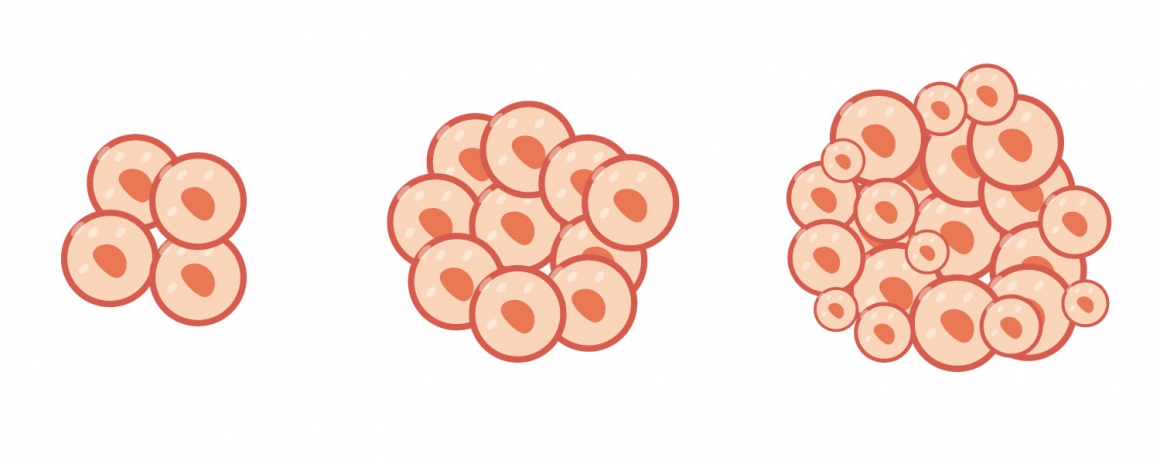
AMH is a hormone secreted in small amounts by the follicular cells in the female ovaries. It plays a role in regulating follicles development and ovulation. The AMH level is influenced by the number of follicles present. There will be a higher AMH reading when you have more follicles. On the other hand, a lower AMH level is brought on by fewer follicles. Therefore, the AMH level is a crucial indicator for evaluating ovarian reserve.
Additionally, the AMH level in the blood is unaffected by the menstrual cycle, pregnancy, use of contraceptives, or other female hormones. It can be measured at any time to track one's ovarian reserve. Thus, measuring AMH is a typical step in fertility testing. However, it is important to note that the AMH level only indicates the number of follicles and does not necessarily reflect the quality of the eggs. For a thorough fertility analysis, it is advised to combine other ovarian examinations.
| AMH < 1 | AMH 2 - 5 | AMH > 5 |
|---|---|---|
| Premature ovarian failure | Normal | Polycystic ovary syndrome |
| 1-2 eggs | 10-15 eggs | more than 16 eggs |
Recent studies have demonstrated that the ovarian reserve of a woman can be accurately determined by the anti-Müllerian hormone (AMH) secreted by growing small follicles. A normal woman’s AMH level should typically range from 2 to 5 ng/dL. AMH level over 5 ng/mL is a sign of polycystic ovary syndrome, which affects 5-10% of women of reproductive age and can lead to difficulties conceiving. AMH level below 1 ng/dL in women aged 35 to 39 indicates a potential onset of menopause 10 to 12 years in the future.
4D Ultrasound in Evaluation of the Ovary
Lee Women's Hospital is one of the few reproductive medical centers in Asia with 4D ultrasound technology. Contrary to conventional black-and-white 2D ultrasound, 4D ultrasound offers colored imaging, enabling accurate ovarian reserve prediction and a clearer view of the uterus’ shape. This information serves as a reference for doctors when deciding which treatments, medications, implantation procedures are best for their patients.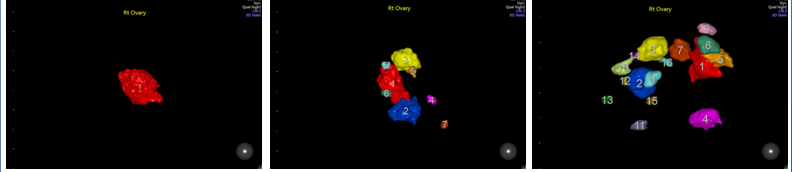
▲4D ultrasound provides colored imaging of follicles in the ovaries
Ovarian reserve not a direct predictor of pregnancy
Women with AMH levels between 2 and 5 ng/mL typically have a higher chance of conceiving. Age-related declines in ovarian reserve lead to a corresponding decline in AMH level.
AMH levels over 5 ng/mL are indicative of polycystic ovary syndrome. Even though there may be more eggs, this does not guarantee there will be enough high-quality eggs to allow for successful conception. Therefore, egg quantity does not assure a higher chance of a successful pregnancy.
There is no need to worry excessively if you are diagnosed with polycystic ovary syndrome or premature ovarian failure. With the assistance of professional doctors, advanced assisted reproductive technologies, such as in vitro fertilization (IVF), can be utilized to help you achieve a successful pregnancy.
If you have any further questions, please feel free to contact us.
How to Reach Our Regional Medical Offices?

M.D./ Ph.D.
Founder & President, Lee Women’s Hospital
National Policy Advisor, Office of the President, Republic of China (Taiwan)/Founder & Chairman, Taiwan Infertility Foundation/Representative Member, Taiwan Association of Obstetrics and Gynecology (TAOG)/Consultant Physician, Department of Obstetrics & Gynecology, Chung Shan Medical University Hospital