







A Complete Guide to Female Infertility Testing — What to Check, How It Works, and When to Start
What Is Female Infertility?
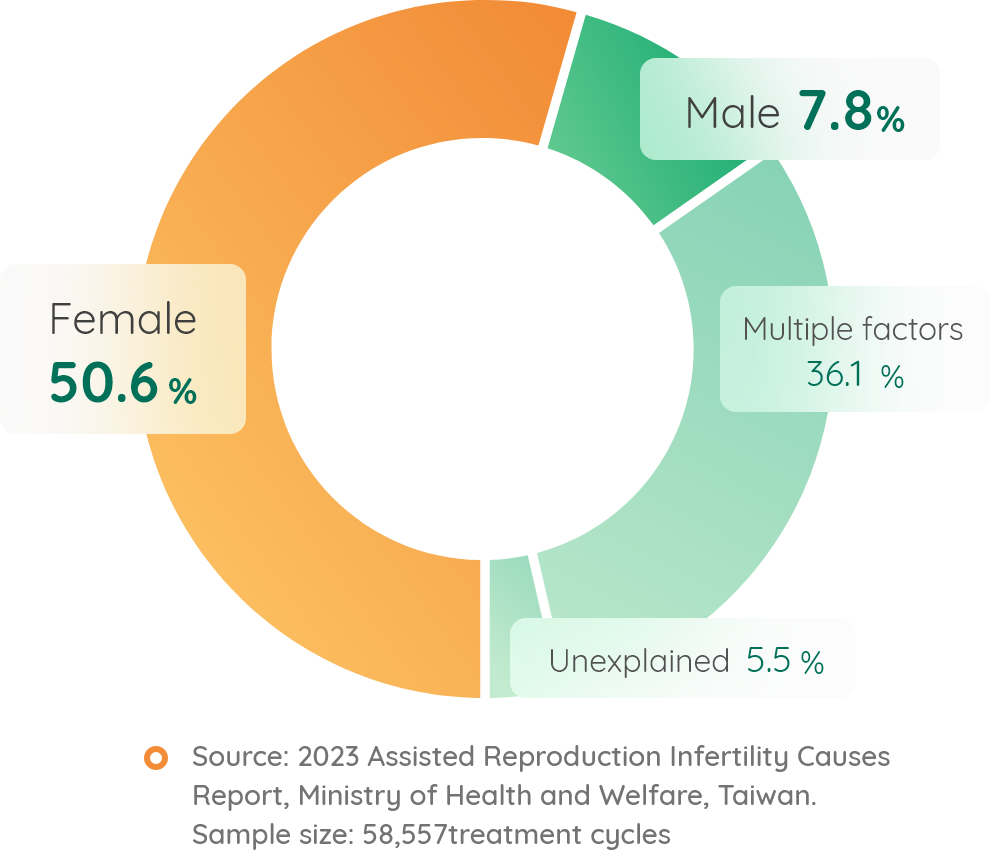
Infertility is defined as being unable to get pregnant after one year or more of regular, unprotected sexual activity. Statistics show that female-related factors account for approx. 40–50% of all infertility cases, including issues such as ovulation problems, blocked fallopian tubes, and an unfavorable uterine environment. Seeking help from a reproductive medicine specialist as early as possible is highly recommended. With a complete infertility evaluation, doctors can identify the underlying causes more clearly and help you plan the next steps sooner—improving both treatment timing and overall success rates.
Female 50.8%
Male 7.8%
Multiple factors 36.2%
Unexplained 5.2%
Common Causes of Female Infertility
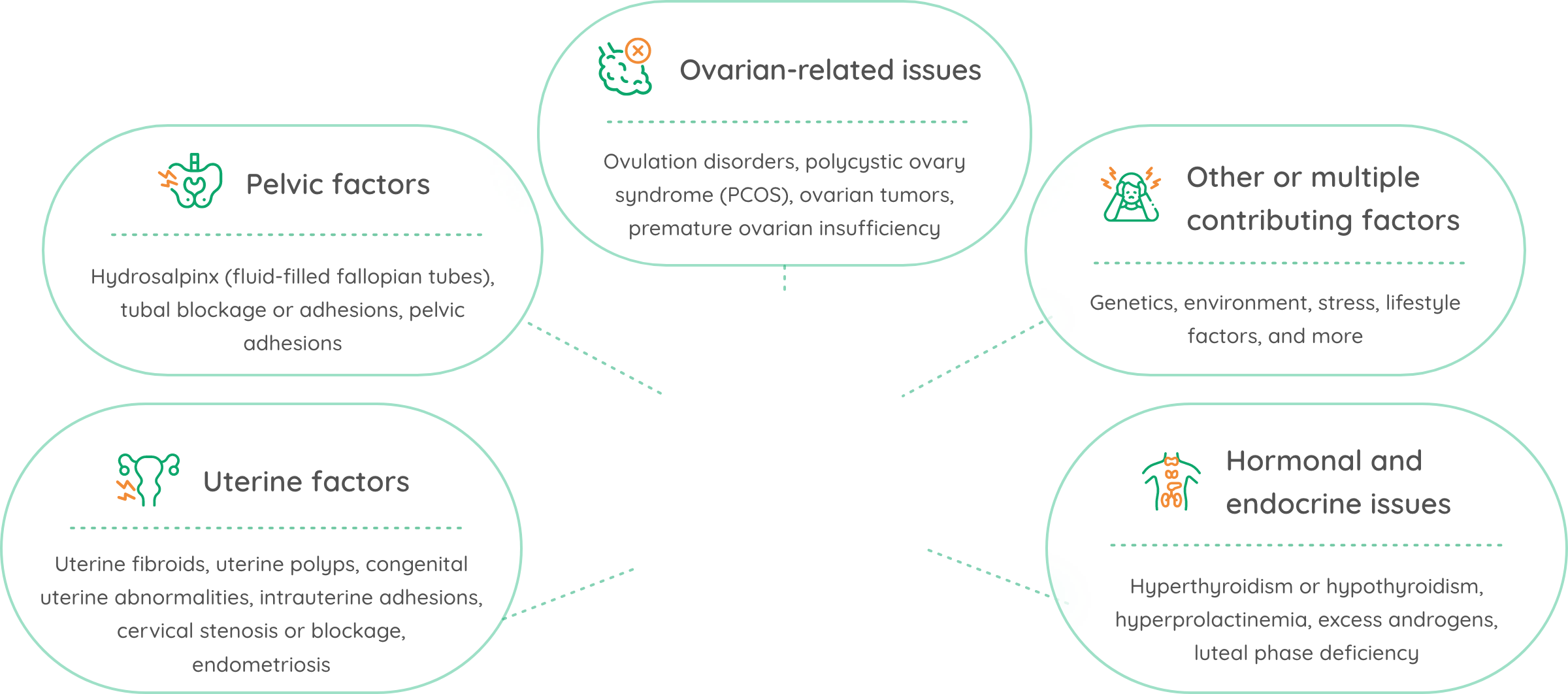
In reproductive medicine, the causes of female infertility can be quite complex, but they mainly involve a few key parts of the reproductive system. Understanding these factors can help guide appropriate testing and treatment decisions:
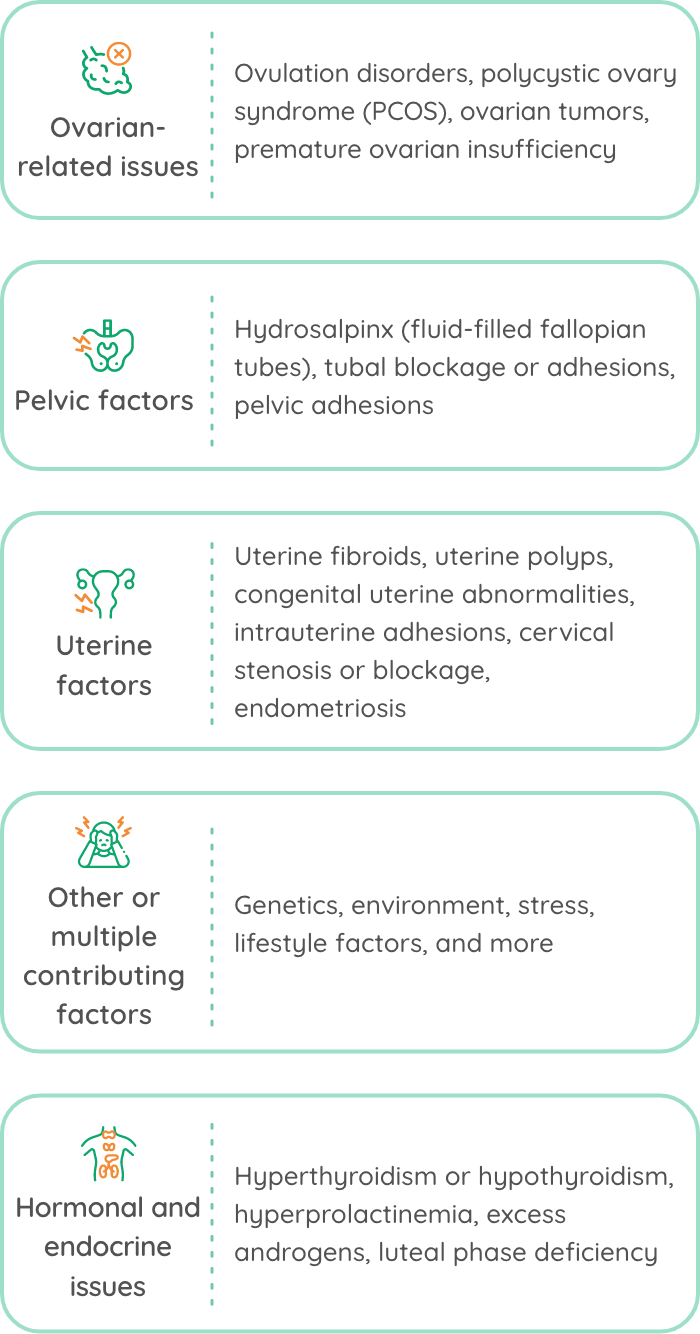
- Uterine factors:Uterine fibroids, uterine polyps, congenital uterine abnormalities, intrauterine adhesions, cervical stenosis or blockage, endometriosis
- Pelvic factors:Hydrosalpinx (fluid-filled fallopian tubes), tubal blockage or adhesions, pelvic adhesions
- Ovarian-related issues:Ovulation disorders, polycystic ovary syndrome (PCOS), ovarian tumors, premature ovarian insufficiency
- Other or multiple contributing factors:Genetics, environment, stress, lifestyle factors, and more
- Hormonal and endocrine issues:Hyperthyroidism or hypothyroidism, hyperprolactinemia, excess androgens, luteal phase deficiency

Who Should Consider Infertility Testing?
Whether a woman should consider infertility testing mainly depends on her age and how long she has been trying to conceive:

Under 35 years old, trying to conceive for over one year without success
If you have been trying to conceive for over one year without success, it is recommended to start infertility testing.
Women aged 35 and above, unable to conceive after six months of trying
Ovarian function and egg quality decline with age, women who have been trying for more than six months are advised to seek medical evaluation and begin infertility testing earlier.
Women with the following gynecological symptoms are advised to consider infertility testing earlier
Even if you are not actively trying to conceive, early testing can still be helpful
- Women who have previously undergone endometrial scratching
- Women with a history of endometriosis, ovarian cysts, or polycystic ovary syndrome (PCOS)
- Women with very heavy or very light menstrual flow
- Women who experience severe menstrual cramps or lower abdominal pain
- Women with irregular menstrual cycles or long-term anovulation
Pre-marital / pre-pregnancy health checkups

For those planning to get pregnant, a basic fertility assessment can be done in advance. This may include blood tests for AMH (a marker of ovarian reserve), hormone levels, and transvaginal ultrasound, helping you better understand your fertility status before trying to conceive.
Female Infertility Testing
Blood Tests (Hormonal Study)
These tests help identify ovulation problems, declining ovarian function, or hormonal imbalances, such as:


Ovarian function assessment: evaluates egg reserve and ovulation function

Thyroid function tests: thyroid disorders can affect menstrual cycle, ovulation, and embryo implantation

Tumor or pathological markers: used to assess whether there are conditions that may affect reproductive function
Transvaginal Ultrasound (TVS)
Transvaginal ultrasound allows doctors to assess whether the uterus and ovaries have any structural or congenital abnormalities. It also helps monitor follicle development in the ovaries, as well as the thickness and changes of the uterine lining. In addition, this exam can detect common gynecological conditions such as uterine fibroids and endometriosis.
2D Ultrasound
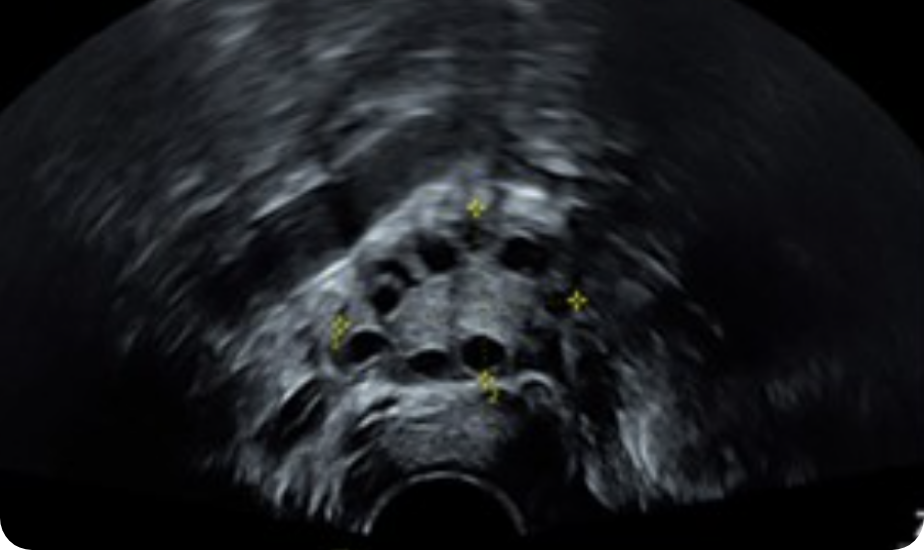

Follicle count and morphology
Uterine position (anteverted or retroverted) and endometrial thickness
Suitable for routine gynecological checkups and women preparing for pregnancy
4D Ultrasound
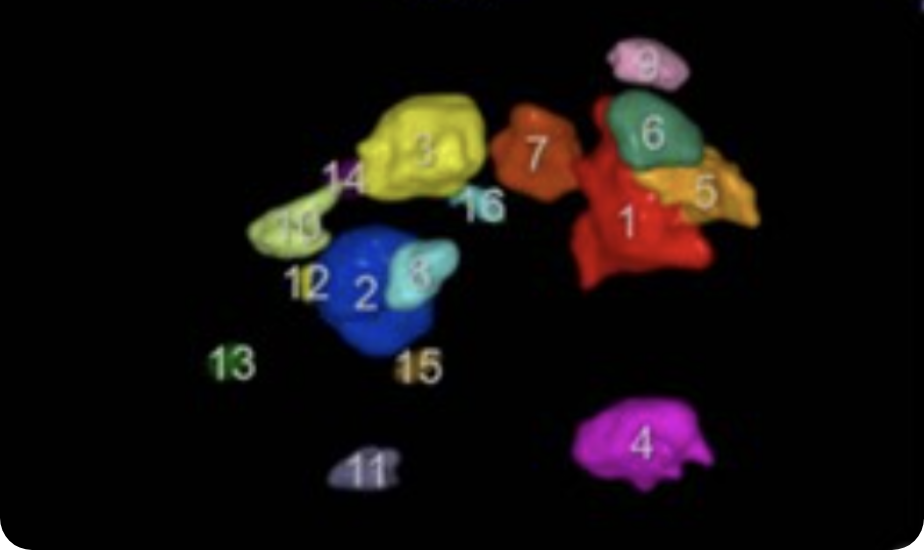

Follicle count and morphology, with each follicle marked in a different color
Uterine cavity shape and surrounding uterine tissues
Suitable for women with known ovulation issues or those suspected of having structural abnormalities of the uterine cavity
Hysterosalpingography (HSG)
Healthy fallopian tubes play a key role in both natural conception and assisted reproduction. Blockage, adhesions, or fluid buildup in the tubes can reduce the chance of natural pregnancy and may also affect the success of fertility treatments, including IVF.
To assess tubal patency, hysterosalpingography (HSG) is usually performed after menstruation and before ovulation. During this procedure, a contrast dye is injected through the cervix, and X-ray imaging is used to check whether the fallopian tubes are open. It can also help identify adhesions, fluid accumulation at the fimbrial end of the tubes, and congenital or structural abnormalities of the uterus.
Hysteroscopic Examination (TCR)
Hysteroscopy allows doctors to directly identify abnormalities inside the uterine cavity and helps diagnose uterine conditions such as endometrial polyps, intrauterine adhesions, uterine septum, uterine fibroids, and chronic endometritis.
Besides fertility testing, diet that supports egg health is also important!
As women age, particularly after the age of 35, both the number and quality of eggs decline. For women over 40, ovarian reserve is significantly reduced, and the chance of natural conception decreases substantially.

Egg development takes time and proper nutritional support. A healthy follicle typically needs to grow to about 18–20 mm in diameter before ovulation can occur, and the process from a primordial follicle to a mature, pre-ovulatory follicle takes roughly 85 days.
For women of advanced reproductive age who wish to conceive, making the most of this valuable time by supporting overall health and ovarian function can help build a strong foundation for a healthy pregnancy.

What Should You Eat to Support Egg Health? Five Key Nutrients for Advanced-Age Fertility
DHEA
Helps improve egg quality and may help support egg quality and reproductive outcomes in women of advanced age
Coenzyme Q10
(CoQ10)
Supports better egg quality and overall ovarian function

Vitamin D3
Supports follicle development, egg quality, and ovarian function
Inositol
Helps promote egg maturation and may improve fertilization and pregnancy rates
Folic Acid
Helps regulate ovulation and supports early embryo development
If egg quality does not improve, assisted reproductive treatments such as IVF or intrauterine insemination (IUI) may be recommended. When the dominant follicle reaches about 18–20 mm, an ovulation trigger shot is given to help release the egg.
Finally, in addition to supporting egg health through diet and supplements, regular exercise, maintaining a positive mood, and minimizing unnecessary environmental exposures are also key tips for improving overall egg quality.
Female Infertility Treatment and Reproductive Options

In Vitro Fertilization (IVF)
In vitro fertilization (IVF) is a reproductive treatment in which eggs and sperm are retrieved and fertilized in a laboratory. The resulting embryos are then cultured and transferred into the uterus.
IVF may be recommended for women with infertility who meet the following conditions:
- Women over the age of 35 with age-related decline in fertility
- Women with bilateral fallopian tube blockage or adhesions, or moderate to severe endometriosis
- Women with anovulation, polycystic ovary syndrome (PCOS), or poor ovarian response
- Women who have undergone three unsuccessful IUI attempts
- Women with unexplained infertility despite normal anatomical and reproductive evaluations
- Other factors, such as recurrent miscarriage or known chromosomal abnormalities in either partner

Intrauterine Insemination (IUI)
Intrauterine insemination (IUI) is a fertility treatment in which sperm is processed in the laboratory to select the healthiest sperm, then placed directly into the uterus around the time of ovulation. The sperm must then travel on their own to the fallopian tube to fertilize the egg.
IUI may be suitable for women with infertility who meet the following conditions:
- Women aged 35 and older, or those with reduced ovarian reserve
- Women with mild endometriosis
- Women with irregular menstrual cycles
- Women with mild fallopian tube adhesions or partial blockage
- Women with unexplained infertility despite normal test results

Who Is IVF Suitable For?
Based on clinical experience, IVF may be recommended for the following groups:
- Women aged 35 and older, or those with low ovarian reserve
- Women with bilateral fallopian tube blockage or adhesions, moderate to severe endometriosis, or adenomyosis
- Couples with poor sperm quality or a high risk of chromosomal abnormalities in sperm
- Women with a family history of genetic or chromosomal disorders
- Women with a history of recurrent miscarriage
- Those who have experienced multiple unsuccessful IUI attempts
- Women with unexplained infertility
Real-life Stories
Lee Women’s Hospital has extensive experience in reproductive medicine.
Through the stories of three women who underwent egg freezing here, we share how advanced medical expertise helped them preserve their dreams for the future.


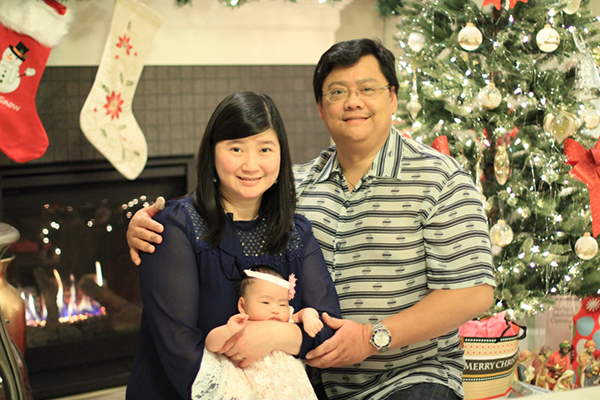


We bridge the distance with online consultations and personalized accompaniment services.
Whether you are ready to book a treatment or simply need more information about costs, or travel timing, please contact our International Affairs Department. We are ready to provide a personalized treatment plan tailored to your needs.
Contact UsLee Women's Hospital
Banqiao Branch

FAQ


When is the Right Time to Consult an Infertility Specialist?

Infertility is defined as a couple failing to conceive after one year or more of regular, unprotected intercourse (2-3 times per week). Generally, if pregnancy is not achieved after one year of trying, it is recommended that the couple consult an infertility specialist.
With the trend of delayed marriage becoming more common, couples over the age of 35 may need to seek medical evaluation sooner to avoid wasting valuable time.
Recommended Timing for Fertility Evaluation
Age Group | When to See a Specialist |
|---|---|
Under 35 (≤ 35) | After 1 year of trying |
35 - 38 years old | After 6 months of trying |
39 - 40 years old | Immediately |
Over 40 (≥ 40) | Immediately |
Why is a Pre-pregnancy Checkup Recommended?
With infertility issues becoming increasingly severe, undergoing a preconception health screening after marriage and before trying to conceive has become crucially important.
This checkup helps couples fully understand their physical health, evaluate potential pregnancy risks, and lay a healthy foundation for the next generation.
Could Still Be Infertile with a Regular Period?
Achieving pregnancy is not solely a woman's responsibility; rather, it is the result of the combined biological conditions and mutual efforts of both partners. For a successful conception, the female partner needs to produce healthy, mature eggs and maintain an optimal uterine environment, while the male partner must provide an adequate number of high-quality sperm.
In clinical practice, we frequently encounter cases where only the female partner comes in for initial fertility evaluations. After thorough testing shows no abnormalities, the male partner—following the medical team's recommendation and communication—finally agrees to undergo testing, only for us to discover that the root cause lies in sperm quality or count. This highlights that male factors are equally crucial and should never be overlooked.
The fundamental process of a successful pregnancy is as follows:
- The female partner releases a healthy, mature egg (ovulation).
- The male partner provides an adequate amount of healthy sperm.
- Intercourse allows sperm to enter the vagina, travel through the uterus, and enter the fallopian tubes.
- Sperm and egg meet in the fallopian tube, where fertilization takes place.
- The successfully fertilized egg forms a zygote, which then develops into an embryo.
- The embryo smoothly travels to the uterus and implants into the uterine lining (endometrium), where the fetus continues to grow.
- The process culminates in delivery and the birth of a healthy baby.