







Donor Eggs IVF Treatment: Cost and Procedure
Why Choose Donor Egg IVF?
In many cases, such as poor egg quality or ovarian failure, women are unable to conceive using their own eggs. To increase their chances of pregnancy, many international patients choose to undergo egg donation procedures in Taiwan—the leading fertility technology hub in Asia—commonly referred to as the "Donor Egg IVF."
Receiving egg donation in Taiwan is fully legal. Lee Women’s Hospital (LWH) is an assisted reproductive center approved by the Taiwan Ministry of Health and Welfare, and the entire treatment process complies with strict legal regulations. When a couple is diagnosed with infertility or a hereditary disease, they can legally utilize egg donation. Currently, the Donor Egg IVF treatment in Taiwan is available to heterosexual couples in a legal marriage who meet the following criteria:

Assessment confirms suitability for assisted reproduction under Article 7 of the Artificial Reproduction Act.

One of the spouses is diagnosed with infertility or a major hereditary disease.

At least one spouse possesses healthy gametes (sperm).

Who needs egg donation treatment?
Physicians may recommend the Donor Egg IVF for couples facing the following conditions:
- Women with ovarian failure or low ovarian reserve due to advanced age or unknown reasons.
- Women with congenital conditions that cause abnormal ovarian development.
- Women who have lost ovulation function due to infections, surgeries, immune factors, or chemotherapy.
- Individuals known to carry genetic disorders that cannot be resolved by Preimplantation Genetic Testing for Monogenic Disorders (PGT-M).
- Women who have undergone multiple unsuccessful egg retrievals, producing poor quality eggs/embryos or a low egg count.
One-Stop Service & Egg Sources
LWH One-Stop Donor Egg IVF
Lee Women’s Hospital offers a comprehensive "One-Stop" Donor Egg Program. We implement stricter screening standards for egg donors compared to general fertility clinics. Whether it is egg donation, matching, or embryo transfer, the entire process is completed within the hospital, ensuring safety and quality assurance.
Our International Affairs Department provides VIP services, including treatment consultations, appointment scheduling, and personal accompaniment during visits, streamlining the process for overseas patients and offering personalized care.
As a leading fertility center in Taiwan, LWH conducts over 4,000 IVF treatment cycles annually. According to the Health Promotion Administration (HPA), 1 out of every 3 IVF babies in Taiwan comes from Lee Women’s Hospital. Our Dean, Dr. Maw-Sheng, Lee, possesses nearly 40 years of clinical experience, and our reproductive team consists of Ph.D. level experts with an average of over 20 years of experience, achieving a single embryo transfer success rate of up to 70%.
Egg Sources: Egg Bank vs. Fresh Cycle
For intended parents undergoing IVF in Taiwan, there are two main sources for donated eggs: Egg Bank (Frozen Eggs) and Fresh Cycle (Matched Donor).
 Egg Bank |  Fresh Cycle | |
|---|---|---|
Features |
|
|
Matching Time | Approx. 2 weeks | Approx. 3–6 months |
Cost Model | Based on the number of eggs | Based on the treatment cycle |
Number of Eggs | Selectable based on needs | Depends on donor's retrieval count |
Success Rate | No difference | |
Choosing between the Egg Bank and Fresh Cycle depends on blood type matching, schedule, and budget. If time is a priority, the Egg Bank is the optimal choice.
Donor Screening & Health Checks
LWH maintains its own egg bank with donors averaging 26 years old. We adhere to the strictest screening standards, exceeding the requirements of the Taiwan HPA by adding chromosomal screening to ensure high egg quality. Donors must pass the following examinations before donation: Age verification, General physical exam, Infectious disease screening (Hepatitis B/C, HIV, Syphilis, Gonorrhea, Chlamydia), Family medical history, Blood type, Ultrasound, Ovarian function (AMH), and Genetic disorder screening (Epilepsy, Thalassemia, Diabetes, Color Blindness, Karyotyping, SMA*, and FXS*).
Process, Examinations, and Technology
Documents and Preparation
Once your participation in the Donor Egg Program is confirmed, please provide:


Copies of both partners' passports
Blood type reports
Notarized marriage certificate
Kinship forms
Data on 2nd-degree direct relatives and 4th-degree collateral relatives

Please contact the International Affairs Department before flying to Taiwan. Our coordinators will guide you through the process, required stay duration, and appointment scheduling. The marriage certificate is a mandatory legal document. To avoid multiple trips, please complete the notarization of your marriage certificate in your home country (and verify it with the relevant Taiwan representative office if applicable) before arrival.
Preparation during the waiting period: We recommend adjusting your lifestyle, maintaining regular exercise routine, and keeping positive mindset. Balanced diet with natural foods will help prepare your body for the upcoming treatment.
Detailed Step-by-Step Flowchart
International patients typically need to visit Taiwan twice. The first visit is for "Check-up & Sperm Storage" (short stay), and the second is for "Embryo Transfer" (longer stay).

Step 1
Online Contact & Booking
- Contact the "International Affairs Department Coordinator" online.
- Verify required documents.
- Coordinator schedules your first appointment.

Step 2
First Visit (Check-up & Sperm Storage)
- Timing: Visit on Day 7-10 of your menstrual cycle. Stay for 3-5 days.
- Key Activities: Submit documents, doctor consultation, health assessment, and Sperm Freezing.
- Female Exams: Blood tests (Blood type, HIV, Syphilis, Hep C, AMH), Vaginal Ultrasound, Hysterosalpingography (HSG), and Hysteroscopy.
- Male Exams: Semen analysis and Blood tests (Blood type, HIV, Syphilis, Hep C).
- Coordinator Assist: Apply for the "Artificial Reproduction Diagnosis Certificate."

Step 3
Matching Results & PGT-A
- Wait for the coordinator to notify you of the Egg Matching Result and government document approval (Egg Bank users typically wait at least 2 weeks).
- Once approved, fertilization and blastocyst culture (Day 5) will be performed.
- Embryos undergo biopsy and are frozen at -196°C.
- Wait for the PGT-A (Chromosomal Screening) report and the doctor's advice on the transfer schedule.

Step 4
Second Visit (Embryo Transfer)
- Timing: Visit on Day 10-13 of your menstrual cycle. Stay for approx. 7-14 days.
- Monitor endometrial thickness via blood tests and ultrasound.
- Schedule and perform Embryo Transfer.

Step 5
Pregnancy Test
- Return home and contact the coordinator online.
- Perform a pregnancy test on Day 34 of the cycle.
- Report the result to LWH.
Key Medical Technologies
Preimplantation Genetic Testing for Aneuploidy (PGT-A)
PGT-A screens the chromosomal count of embryos before transfer. It can detect chromosomal abnormalities such as Down Syndrome, Turner Syndrome, Edwards Syndrome, etc. At LWH, we use the High-Resolution Next-Generation Sequencing (hr-NGS) platform, which detects all 23 pairs of chromosomes with greater precision than traditional array methods (aCGH).
PGT-A cannot detect single-gene disorders (like Thalassemia or Hemophilia) or micro-deletions (<10MB).
Vitrification Technology
While waiting for PGT-A results, embryos are cryopreserved. LWH utilizes Vitrification, the most efficient freezing method in modern medicine. This technique dehydrates cells and cools them at an ultra-fast speed (-23,000°C/min) to -196°C, preventing ice crystal formation. The post-thaw survival rate exceeds 95%, ensuring that frozen eggs/embryos maintain a quality comparable to fresh ones.
Precision Embryo Transfer
- Pre-Transfer: We use high-resolution vaginal ultrasound to measure the depth of the uterine cavity (avg. 2.2cm - 3.5cm) to determine the precise placement of the catheter, avoiding contact with the uterine fundus which could cause contractions.
- During Transfer: Doctors monitor the process via abdominal ultrasound to ensure the embryo is placed in the optimal position. For special cases (e.g., retroverted uterus), ultrasound guidance allows for angle adjustments to maximize success.

Treatment Costs
The estimated cost for the Donor Egg IVF treatment is approximately USD 18,300 to 28,300. This fee includes:
Donor's egg retrieval and nutritional fees.
Donor's comprehensive health examination.
Recipient couple's IVF laboratory and procedure fees.
For International patients, we offer consultation and accompaniment services. Please contact the International Affairs Department for a detailed quote.
Why Choose Lee Women’s Hospital?
Features of Fertility Treatment at Lee Women’s Hospital
Lee Women’s Hospital has helped couples from over 38 countries achieve their dreams of parenthood, welcoming more than 40,000 IVF babies into the world.
To ensure a smooth and reassuring medical journey to Taiwan, we provide exclusive International Medical Services for overseas patients. Our International Affairs Department is staffed with experienced bilingual coordinators who offer comprehensive support, including pre-travel online medical consultations, one-on-one personalized accompaniment during your stay in Taiwan, and dedicated assistance throughout your treatment to ensure clear communication without language barriers.
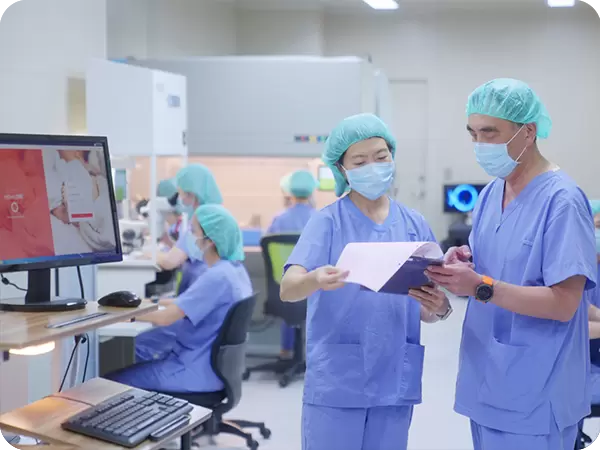
Lee Women’s Hospital has invested hundreds of millions to establish a world-class reproductive medicine center. Our facility is supported by a large team of fertility specialists, three core laboratories, and dedicated international patient coordinators. Through advanced reproductive technologies and attentive, patient-centered care, we are committed to helping every family transform their hope for a child into reality.

Real-life Stories
Lee Women’s Hospital has extensive experience in reproductive medicine.
Through the stories of three women who underwent egg freezing here, we share how advanced medical expertise helped them preserve their dreams for the future.


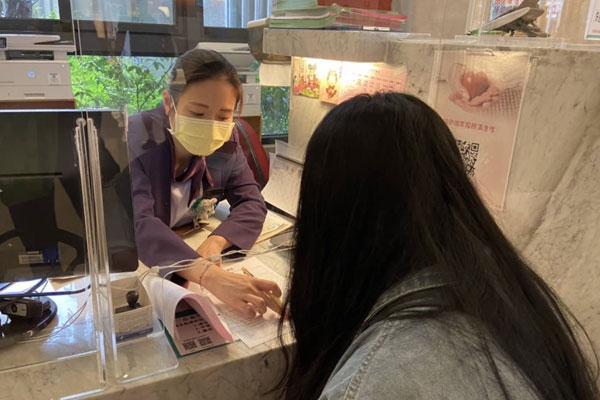

We bridge the distance with online consultations and personalized accompaniment services.
Whether you are ready to book a treatment or simply need more information about costs, or travel timing, please contact our International Affairs Department. We are ready to provide a personalized treatment plan tailored to your needs.
Contact UsLee Women's Hospital
Banqiao Branch

FAQ


Is it legal to receive egg donation for Donor Egg IVF treatment in Taiwan? What are the requirements?

Donor Egg IVF treatment in Taiwan is legal. LWH is an assisted reproductive center approved by the Taiwan Ministry of Health and Welfare, and the entire treatment process complies with legal regulations. When one spouse is diagnosed with infertility or a genetic disease, they can utilize egg donation to proceed with Donor Egg IVF treatment.
Currently, donor egg IVF in Taiwan is limited to heterosexual couples in a legal marriage who meet the criteria based on Article 7 of the Artificial Reproduction Act in Taiwan.
- General psychological and physiological state.
- Family disease history, including records of hereditary diseases of the person in question and blood relatives within the fourth degree of kinship.
- Suspected hereditary or infectious diseases affecting ability to give birth.
- Other matters designated and announced by the competent authority.
How can I find a suitable egg donor? Does the hospital assist in donor matching?
LWH has its own egg bank, with egg donors having an average age of 26 years. These donors undergo thorough physical examinations and chromosomal screening to ensure the quality of the eggs. According to Taiwanese law, the recipient couple cannot specify a particular donor, and the donor cannot specify the recipient couple. As a lawful reproductive medical institution, we strictly adhere to the Taiwan Artificial Reproduction Act. The information of the egg donors, such as their race, ethnicity, and blood type, can only be provided to the recipient couple.
This is because the entire process must comply with the three principles of "anonymity, no specification, and non-compensation." During the matching process, the Taiwan Ministry of Health and Welfare verifies that there are no familial relationships between the donor and the recipient family. Anonymous matching not only protects the privacy of the donor but also ensures that the recipient couple's family will not be disturbed in the future.
What is the success rate of Donor Egg IVF treatment?
In LWH, donor egg IVF treatment has a live birth rate of 70%. According to official statistics from the Taiwan Ministry of Health and Welfare, the success rates for Donor Egg IVF treatment using donated eggs are as follows: a fresh embryo live birth rate of 53.8% and a frozen embryo live birth rate of 40.3%.
(Source: The Assisted Reproductive Technology Summary 2020 National Report of Taiwan)
Can we see the doctor first before deciding whether to proceed with Donor Egg IVF?
Yes, you can. Accepting Donor Egg IVF treatment is a significant decision, and you can come to the hospital for examinations first before confirming the need for Donor Egg IVF. Please contact our International Affairs Department and prepare a marriage certificate that has completed the notarization process before arranging your visit to LWH.
What difficulties might arise in Donor Egg IVF?
According to the law, the legally designated egg donor must be between 20 and 40 years old. The average age of egg donors at LWH is 26 years old. However, using donated eggs does not guarantee a 100% pregnancy rate because the physiological age of the recipient woman remains unchanged and can still be affected by the uterine environment and the quality of the husband's sperm, which can impact the pregnancy rate.
To increase the thickness of the uterine lining, female hormones can be supplemented to achieve a thickness of 8mm or above, creating an environment similar to natural cycle embryo implantation.
If the quality of the husband's sperm is poor, it can be adjusted through medication. If the issue lies in the sperm's ability to penetrate, intracytoplasmic sperm injection (ICSI) and Spindle View Positioning Technology can be used to increase the fertilization rate and avoid damage to chromosomes during the artificial fertilization process.
What is the general process for Donor Egg IVF?
For international patients, please contact the International Affairs Department before starting your IVF journey. We will request your identification documents and notarized marriage certificates. Once these documents are collected, we will schedule a clinic appointment for you.
During your initial visit to Taiwan, we will arrange various physical examinations, including hormone tests, hysterosalpingography (HSG), hysteroscopy, and semen analysis. If any factors that hinder pregnancy are identified, we will proceed with surgical or medical interventions to address them, and then you can formally enter the treatment process.
After the egg matching process is completed, our embryologist will fertilize the donor's eggs with the male partner's sperm to create embryos. The embryos will be cultured until the fifth day, at which point an embryo biopsy will be performed for testing. The embryos will then be cryopreserved in liquid nitrogen at -196°C, awaiting the results of preimplantation genetic testing for aneuploidy (PGT-A).
Once the test results are available, you will need to arrive in Taiwan on Day 10–12 of your next menstrual cycle for the lining check and embryo transfer (total stay is approx. 7–14 days, depending on the transfer date) to complete the embryo transfer procedure.