








Preimplantation Genetic Testing for Health Assessment (PGT-H)
Combining Genetic Data with AI Algorithms to Precisely Assess Disease Risk Before Embryo Transfer
What is PGT-H?
PGT-H is a novel application that combines in vitro fertilization (IVF) and genetic technology. Its purpose is to evaluate the potential risk of an embryo developing certain diseases in the future through genetic testing before embryo transfer. By analyzing a DNA sample, a "Polygenic Risk Score" (PRS) is calculated, which is used to assess the future genetic risk of developing specific polygenic diseases within ancestry-matched reference populations, such as type 1 and type 2 diabetes, and hypertension.
Unlike single-gene testing (PGT-M, Preimplantation Genetic Testing for Monogenic Disorders), which targets specific conditions like thalassemia, PGT-H assesses the risk of diseases influenced by multiple genes. These conditions are not caused by a single mutation but by dozens or even hundreds of genetic variants (SNPs) which, combined with environmental factors and personal habits, comprehensively affect a person's health. This health risk assessment helps provide your future child with a healthier starting point.
How is the Risk Score Determined?
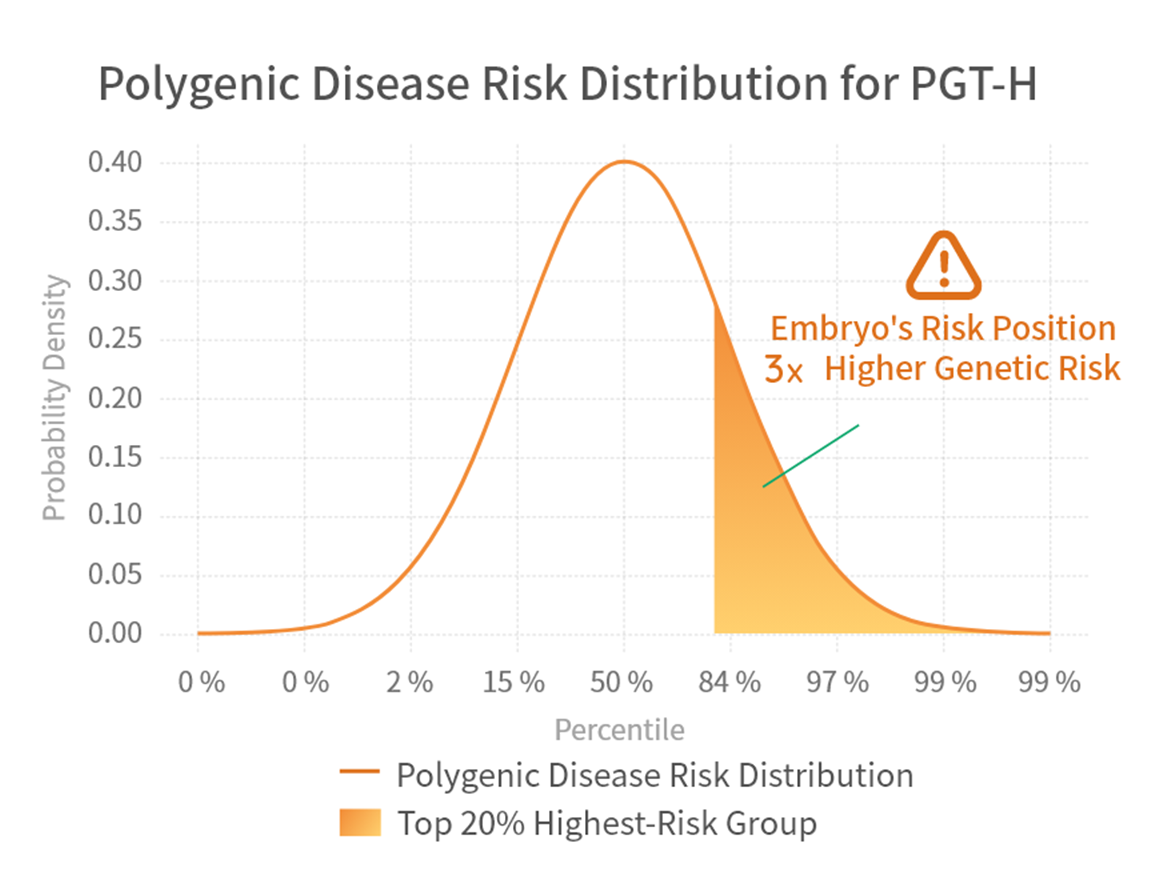
PGT-H uses data from large-scale human genetic studies to build a statistical model that evaluates an embryo's potential health risks. These models analyze numerous disease-related genetic variants (SNPs) to comprehensively calculate a "Polygenic Risk Score" (PRS). For example, if an embryo's PRS indicates a risk of developing diabetes that is higher than 80% of the general population, it suggests a relatively higher lifetime risk of developing the disease under similar environmental conditions. This type of assessment allows reproductive physicians and families to better understand potential health risks before embryo transfer, helping them make a more comprehensive reproductive choice.
Who Should Consider PGT-H?

For those with a history of miscarriage or IVF failures

To prioritize the transfer of lower-risk embryos

To adjust lifestyle habits to mitigate disease risk
For individuals with a history of miscarriage or repeated IVF failures, PGT-H has potential auxiliary value when combined with other indicators (such as PGT-A). It is not meant to "treat" or "prevent" diseases, but rather to serve as an auxiliary reference for prioritizing the transfer of lower-risk embryos among many. The risk of a polygenic disease is probabilistic, not definitive. While it cannot eliminate the risk or guarantee a disease will not occur in the future, it can help families make lifestyle adjustments to mitigate the risk.
What Disorders Can PGT-H Assess Risk For?

- Type 1 Diabetes (Type 1 DM)
- Type 2 Diabetes (Type 2 DM)
- Coronary Artery Disease
- Myocardial Infarction
- Elevated LDL Cholesterol (Dyslipidemia)
- Hypertension
- Breast Cancer
- Colorectal Cancer
- Hepatocellular Carcinoma
- Lung Cancer
The PGT-H Procedure
