

Male Fertility Testing
Male Fertility Testing – The First Step in Understanding Male Reproductive Health

About 40% of infertility cases are related to male factors
When couples experience difficulty conceiving, many people instinctively assume the issue lies with the woman. In fact, approximately 40% of infertility cases are attributable to male factors. Male fertility testing is therefore an essential first step in evaluating reproductive capacity. Through semen analysis, hormonal testing, and testicular function assessments, potential issues such as low sperm count, reduced motility, or abnormal morphology can be identified at an early stage.
The importance of early testing
Early evaluation not only improves the chances of conception but also enables doctors to provide targeted treatment and appropriate medical advice. Furthermore, some reproductive issues may also reflect overall health conditions, such as endocrine disorders, genetic diseases, or urological abnormalities. Fertility testing therefore plays a role in both early detection and timely treatment of related conditions.
Male fertility testing is not solely about reproduction—it also represents a comprehensive health assessment and a responsible step toward safeguarding one’s overall well-being.
Causes of Male Infertility
Male infertility can indeed be associated with genetic abnormalities, as well as lifestyle habits, anatomical factors, and underlying medical conditions. The following are common categories of causes:
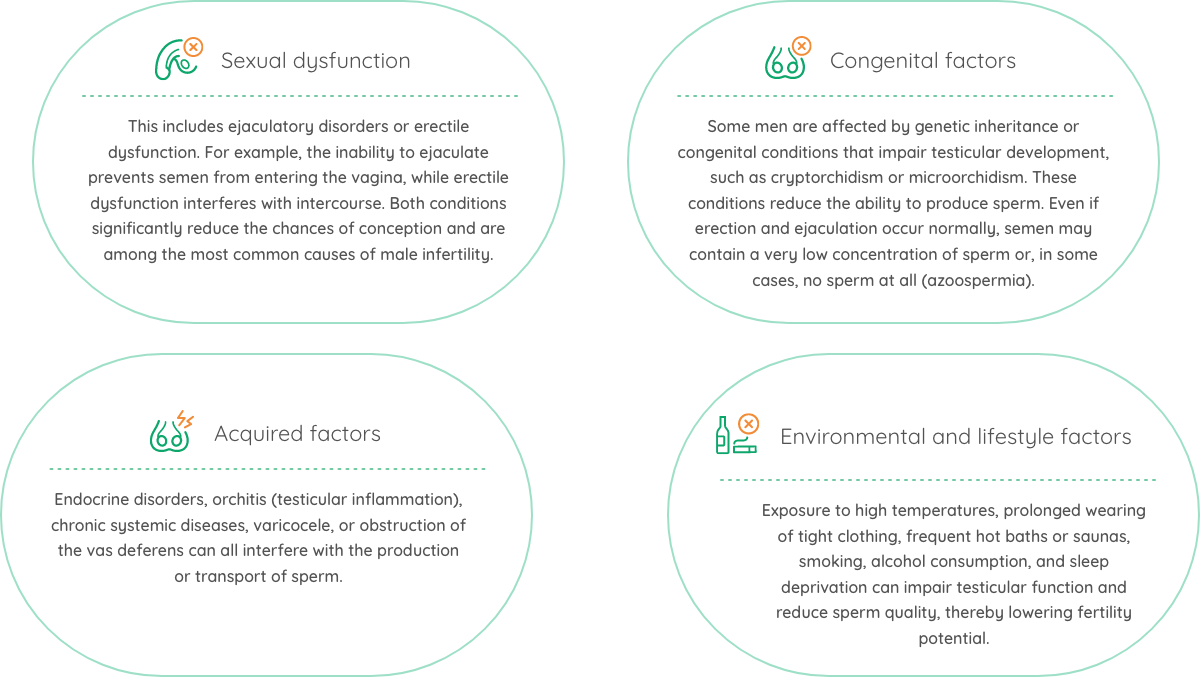
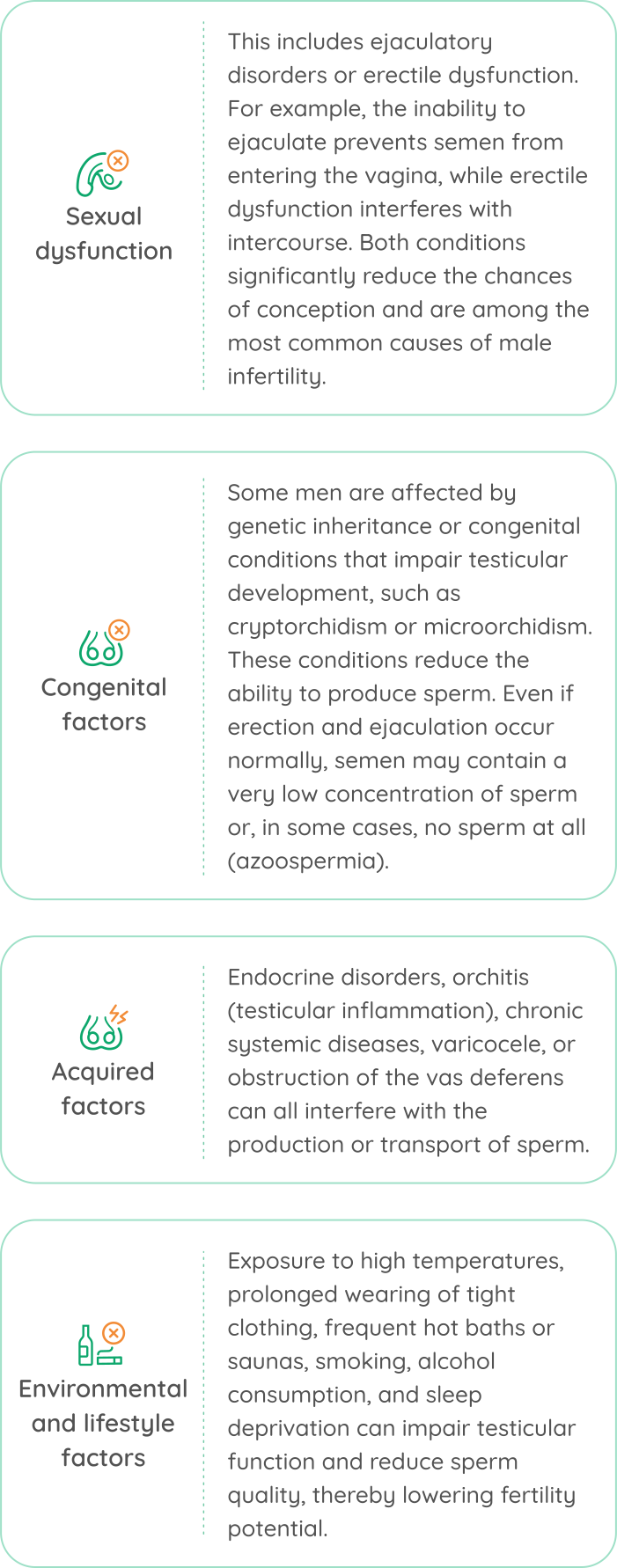
Sexual dysfunction
This includes ejaculatory disorders or erectile dysfunction. For example, the inability to ejaculate prevents semen from entering the vagina, while erectile dysfunction interferes with intercourse. Both conditions significantly reduce the chances of conception and are among the most common causes of male infertility.
Congenital factors
Some men are affected by genetic inheritance or congenital conditions that impair testicular development, such as cryptorchidism or microorchidism. These conditions reduce the ability to produce sperm. Even if erection and ejaculation occur normally, semen may contain a very low concentration of sperm or, in some cases, no sperm at all (azoospermia).
Acquired factors
Endocrine disorders, orchitis (testicular inflammation), chronic systemic diseases, varicocele, or obstruction of the vas deferens can all interfere with the production or transport of sperm.
Environmental and lifestyle factors
Exposure to high temperatures, prolonged wearing of tight clothing, frequent hot baths or saunas, smoking, alcohol consumption, and sleep deprivation can impair testicular function and reduce sperm quality, thereby lowering fertility potential.


Routine Diagnostic Tests for Male Infertility
Semen Analysis (SA)
Semen analysis (SA) is the fundamental test for evaluating male fertility. By examining parameters such as sperm volume, motility, and morphology, doctors can assess the overall health of sperm. This is a key test in determining male reproductive potential.
| Examination Item | Normal Reference Value |
|---|---|
Semen Volume | At least 1.5 ml |
Sperm Concentration | At least 15 million sperm per milliliter |
Sperm Motility | More than 40% motile sperm |
Progressive Motility | At least 30% of sperm moving forward in the same direction |
Sperm Viability | More than 54% of sperm alive |
Sperm Morphology | At least 4% of sperm with normal morphology |
- Refrain from ejaculation for 3 days before the test to avoid affecting the results.
Advanced Diagnostic Tests for Male Infertility
Hyaluronan-binding Assay(HBA)
The Hyaluronan-binding Assay (HBA) is a test that helps predict sperm function and fertilization potential. While routine semen analysis evaluates sperm volume, morphology, and motility, some men present with normal results yet still struggle with infertility. In such cases, doctors may recommend advanced sperm testing, including the Hyaluronan-Binding Assay.
Refrain from ejaculation for 3 days before the test to avoid affecting the results.
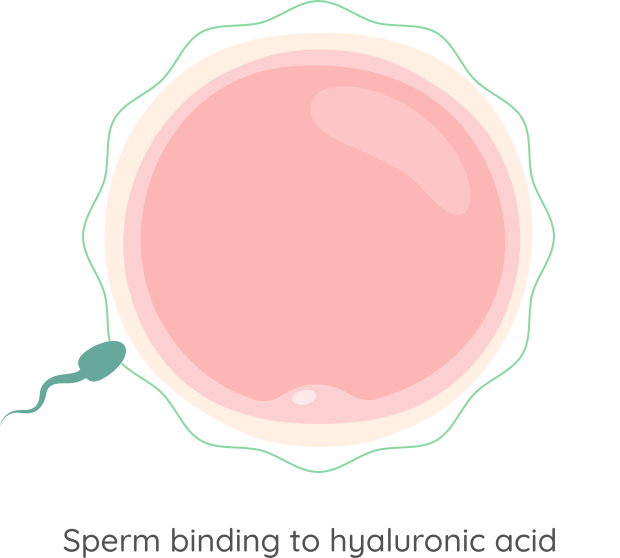
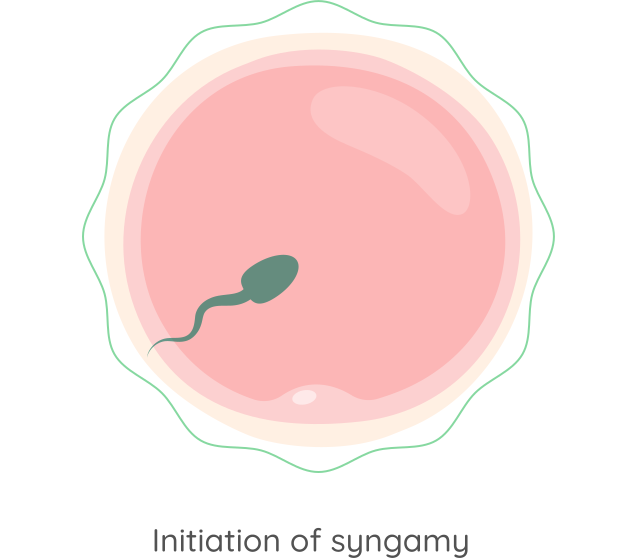
What is the Hyaluronan-binding Assay (HBA)?
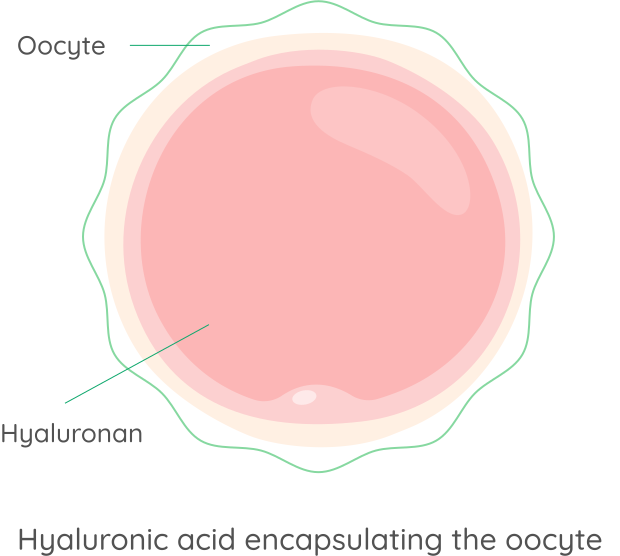
During natural fertilization, the egg is surrounded by a layer of cells known as thecumulus oophorus, whose extracellular matrix is rich in hyaluronic acid (HA). Mature and functionally competent sperm are naturally attracted to and bind with HA, which triggers the “hyperactivation response” enabling them to penetrate the oocyte.
The Hyaluronan Binding Assay (HBA) works by observing how many sperm in a sample are able to bind to hyaluronan. A higher binding rate indicates that the sperm have stronger fertilization potential with the egg and therefore a greater chance of successful fertilization. Generally, the binding rate in an HBA test should exceed 80%.
The results of this test can also help doctors in determining whether ICSI is necessary to facilitate fertilization during an IVF cycle.

Who Should Consider HBA?
- Men whose partners have experienced multiple failed IUI attempts
- Couples who have undergone IVF without achieving pregnancy
- Men with normal semen analysis results but persistent infertility
Sperm DNA Fragmentation Analysis
Sperm DNA fragmentation is a major defect in sperm chromatin that can contribute to male infertility, abnormal embryo development, and miscarriage. This test uses molecular biology techniques to evaluate the integrity of sperm DNA, determining whether there is a high proportion of damaged or broken DNA strands.
Research shows that a high DNA fragmentation rate is strongly associated with reduced fertilization, poor embryo quality, implantation failure, and an increased risk of miscarriage. It is particularly valuable in cases of repeated IVF failure or recurrent pregnancy loss. If all other infertility tests are normal but infertility or miscarriage persists, sperm DNA fragmentation analysis may be considered.
This test requires advance booking.
Multiple Sperm Retrieval Method to Preserve Male Fertility
For men undergoing infertility treatments, especially those with azoospermia (no sperm in the semen) or poor sperm quality, doctors will determine—based on the underlying cause and evaluation—whether to perform microsurgical sperm retrieval.
Procedure description
Semen is collected through masturbation. During the process, it is important to maintain cleanliness and sterile conditions to ensure sample quality.

Step 1
Obtain a Sterile Container
Please request a sterile container for semen specimen collection from the nurse during your consultation.

Step 2
Hand and Genital Hygiene
Wash your hands and genital area thoroughly before collecting the semen specimen to prevent contamination.

Step 3
Semen Collection by Masturbation
Semen should be collected without using lubricants or foreign substances. The use of condoms or alternative methods is not recommended.

Step 4
Collect directly into the provided bottle
Collect all the semen directly into the given bottle. Close it tightly, then note the required details before handing it to the lab.

Step 5
Delivery to Laboratory
Maintain the specimen at room temperature and deliver it to the lab within 2–3 hours to ensure that specimen quality is not compromised.
Dedicated Sperm Collection Rooms — Reducing Stress and Discomfort During the Process
Lee Women’s Hospital has thoughtfully designed private and comfortable sperm collection rooms, equipped with complete hygiene and sanitation facilities. These dedicated spaces provide a relaxing environment to help patients complete sample collection with ease.

Taichung Main Hospital: 2nd Floor Collection Room

Banqiao Branch: 3rd Floor Collection Room
Minimally Invasive Sperm Retrieval
When semen cannot be obtained naturally or when no sperm is found in the ejaculate (azoospermia), doctors may recommend surgical sperm retrieval. In this procedure, viable sperm are directly extracted from the epididymis or testicular tissue. These are minimally invasive techniques, usually performed under outpatient care or short-term anesthesia. With the support of an experienced reproductive medicine team and precise microsurgical techniques, the retrieved sperm can be used immediately for IVF or cryopreserved for future use—maximizing the chances of pregnancy.

Epididymal Sperm Retrieval
PESA (Percutaneous Epididymal Sperm Aspiration) Suitable for obstructive azoospermia, this procedure precisely extracts mature sperm from the epididymis.

Testicular Sperm Retrieval
M-TESE (Microsurgical Testicular Sperm Extraction) Suitable for non-obstructive azoospermia, this technique involves microsurgical dissection or biopsy of the testes to locate viable sperm.
Upgraded Equipment × Advanced Technology: Boosting IVF Success Rates
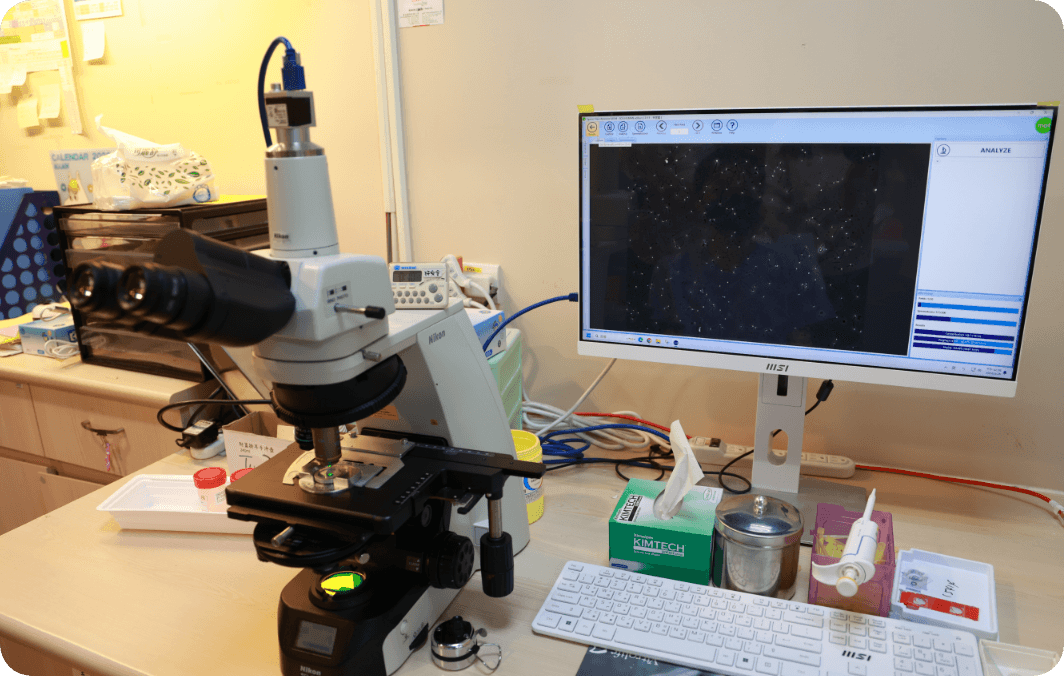
CASA – Computer-Assisted Sperm Analysis
Our hospital is equipped with a fully automated sperm analysis system that integrates computer technology with real-time video imaging to evaluate semen samples and assess sperm quality. The CASA system offers automation, high precision, and efficiency, making it the standard tool for modern male fertility testing.
With CASA, multiple key data can be quickly and accurately provided, including:

Total sperm count and concentration

Sperm motility and progressive velocity

Linearity of sperm movement and amplitude of motion trajectory
Scientific, Data-Driven, and Reliable Fertility Assessment
At Lee Women’s Hospital, the CASA system is combined with expert interpretation by our professional team to provide every man seeking fertility care with a scientific, data-driven, and highly reliable assessment of reproductive potential.
Finding the Cause: The First Step Toward Hope
Every journey to parenthood begins with courage. At Lee Women’s Hospital, we understand that identifying the cause is the first step toward success.
For male infertility diagnosis, we not only provide routine semen analysis but also incorporate advanced molecular testing, including sperm DNA fragmentation analysis, and Y-chromosome microdeletion screening. These comprehensive evaluations allow us to thoroughly examine sperm function and quality.
Our center is equipped with internationally accredited diagnostic technology, including fluorescence microscopes, high-resolution imaging systems, precision centrifugation and sample processing instruments, all within laboratories that meet ISO international quality standards. This ensures the accuracy of all tests in IVF procedure.
Lee Women’s Hospital is committed to uncovering the underlying causes and creating a personalized treatment plan—walking alongside you on the path to fulfilling your dream.